
Los Angeles Bureau of Engineering Dumpster Permit Street Bin: What Contractors and Homeowners Must Know
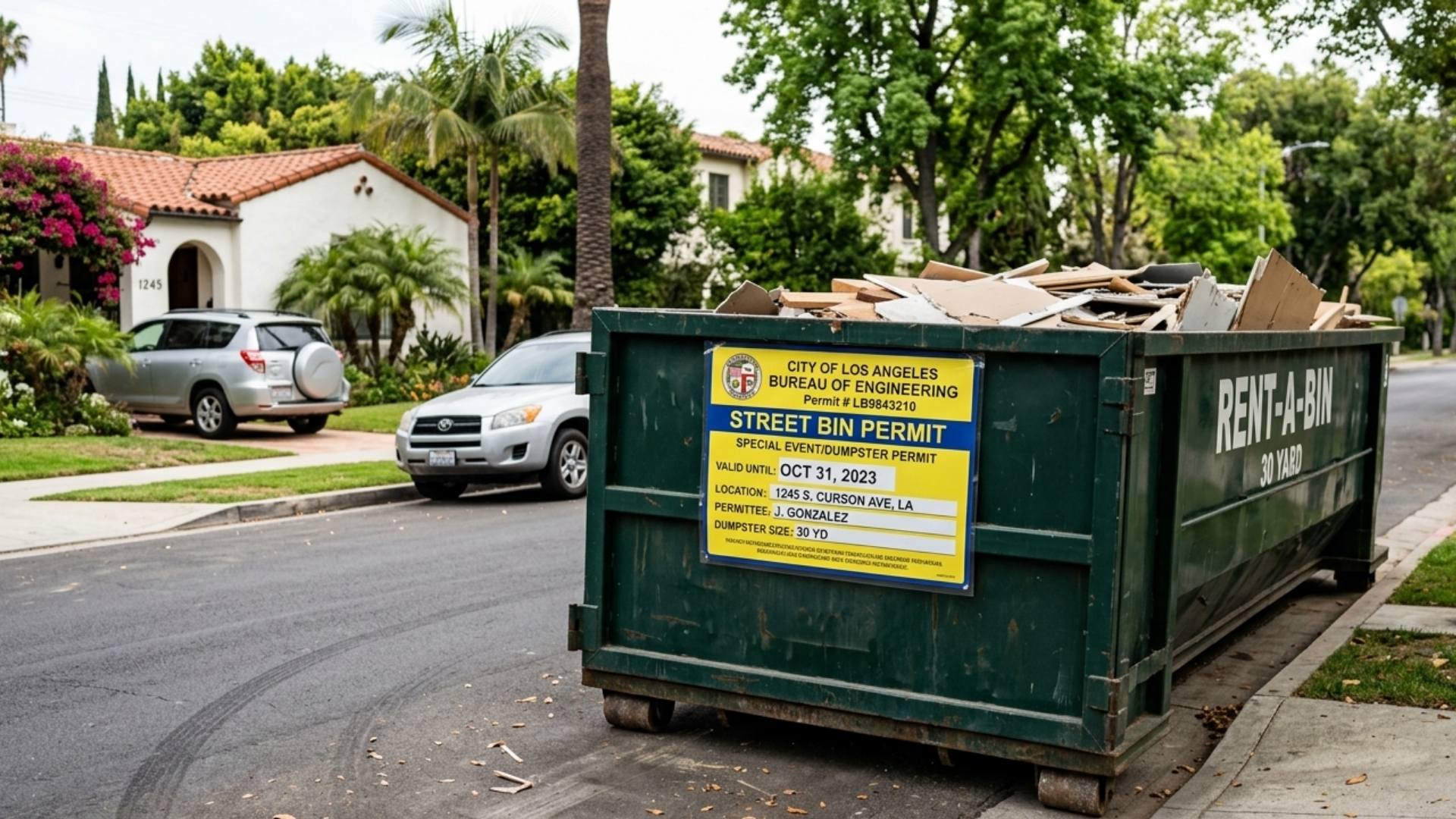
Anyone who has managed a construction project, home renovation, or large-scale debris removal in Los Angeles has likely encountered the question of where to put the dumpster. When a driveway is unavailable, too narrow, or simply not practical, the answer is almost always the street. That is where the Los Angeles Bureau of Engineering dumpster permit street bin process becomes directly relevant, and where skipping the proper steps can turn a straightforward logistics decision into a costly compliance problem.
Understanding the rules around street bin placement is not just about avoiding fines. It is about running a project professionally, keeping your neighbors and the public safe, and ensuring that the city's infrastructure is respected throughout the work.
This guide walks through everything contractors and homeowners need to know, from which agency oversees the permit and why, to how to apply, what the conditions require, and how to stay compliant from delivery to pickup.
Easy Waste Management Makes the Permit Process Simpler
If you are planning a project in Los Angeles and need a dumpster placed on the street, Easy Waste Management is the most straightforward path forward. Their dumpster rental service covers a full range of container sizes, and the team brings deep familiarity with local permitting requirements across the city.
Rather than navigating the street bin permit process entirely on your own, working with a provider that already understands how the system works removes one of the more time-consuming variables from your project planning.
With a 4.9-star rating and a base in Sun Valley at the heart of the Los Angeles area, Easy Waste Management combines local knowledge with professional reliability in a way that makes them the clear first call for anyone renting a roll-off container in the region.
What the Bureau of Engineering Has to Do with Your Dumpster
The Los Angeles Bureau of Engineering (BOE) is a division of the city's Department of Public Works, and one of its core responsibilities is managing use of the public right-of-way. While many people associate the BOE with large-scale civil infrastructure projects, the bureau also oversees the permitting framework for temporary street occupancies, which includes placement of roll-off bins, construction staging equipment, and similar short-term uses of curb lanes and street space.
The Bureau's Role in Protecting Public Infrastructure
The reason the Bureau of Engineering is involved is not purely administrative. Street surfaces, curb structures, drainage channels, and subsurface utility corridors are city assets. When a heavy container is placed on a street without authorization or proper precautions, the risk of damage to those assets is real. The BOE's permitting process exists in part to ensure that placement locations are reviewed for conflicts with known infrastructure and that the party responsible for the container is formally identified in case damage or safety issues arise.
It is worth understanding that the BOE operates alongside other city agencies in the permitting ecosystem. Depending on the nature of the project and the specific location, certain placements may involve coordination with the Bureau of Street Services or other DPW divisions. For most standard dumpster placements, however, the BOE is the primary issuing authority, and the application process is handled through its permit office and online systems.
Street Bin vs. Driveway Placement: Knowing When a Permit Is Required
The fundamental trigger for a street bin permit is simple: if any portion of the container will rest on or extend into the public right-of-way, a permit is required. The right-of-way typically encompasses the roadway, curb lane, and in some cases the parkway strip between the curb and the sidewalk. It is a public asset managed by the city, not an extension of private property.
Placing a dumpster entirely within a private driveway, on a personal parking pad, or inside a gated lot generally does not require a street use permit. The container must be fully contained within private property boundaries, with no overhang into the curb lane or street. This distinction matters because homeowners sometimes assume that placing a dumpster near the street edge of their driveway is fine, when in fact even minor encroachment into the public space requires a permit.
Why the Line Between Private and Public Space Matters
Enforcement in Los Angeles is active enough that unpermitted street containers do get cited. Code enforcement officers and Bureau of Street Services field teams conduct patrols in areas with high construction activity, and fines for unpermitted placements are not nominal. Beyond the financial penalty, the city has the authority to order immediate removal of an unauthorized container, which can delay a project significantly if the rental company cannot retrieve it and return with a permitted placement on short notice.
For anyone unsure whether their intended placement crosses into the right-of-way, the safest approach is to contact the BOE directly or consult with your dumpster rental provider before delivery day. A brief conversation during the planning phase is far easier to manage than a citation and forced removal mid-project.
Who Is Responsible for Obtaining the Permit
In Los Angeles, the permit responsibility typically falls on the party placing the container in the right-of-way, which in most cases is the dumpster rental company acting on behalf of the property owner or contractor. Many established rental providers include permit procurement as part of their service offering, filing the application, paying the fees, and ensuring the required safety equipment is in place before delivery.
When the Homeowner or Contractor Holds the Obligation
That said, not every rental company handles permits on their clients' behalf, and some projects require the contractor or property owner to obtain the permit directly. In those situations, the applicant is responsible for all application requirements, fee payments, and ongoing compliance for the duration of the placement. If there is any ambiguity about who is managing the permit, that should be resolved in writing before the container is delivered, since the city will look to the permit holder in any enforcement situation.
Contractors managing multi-phase projects or multiple active sites in the city are well-advised to establish a clear internal workflow for street use permits. Keeping permit copies on-site, tracking expiration dates, and assigning a specific team member to manage renewals or extensions prevents the kind of administrative oversights that lead to expired permits going unnoticed until a field inspector arrives.
How to Apply for a Street Bin Permit Through the Bureau of Engineering
The application process for a street bin permit begins with gathering the necessary project information. Before submitting anything to the BOE, you will need the property address where the container will be placed, the intended placement and removal dates, the dimensions of the container, and the name and license information of the dumpster rental company. Having this information organized before starting the application reduces processing errors and avoids delays caused by incomplete submissions.
The Bureau of Engineering processes street use permit applications through its permit counter as well as through the city's online permitting platforms. For standard residential or commercial dumpster placements, online submission is the most efficient route. The application form asks for placement details, the nature of the project, and contact information for all responsible parties. Once submitted, the application enters a review queue where BOE staff assess the requested location for any conflicts with city infrastructure or existing permitted uses.
Fees, Processing Time, and Receiving Your Permit
Permit fees are based on the size of the occupied area and the duration of the placement. For a typical residential dumpster placement lasting one to two weeks, fees are generally modest, though applicants should verify current rates directly with the BOE at the time of application as they are subject to change. Payment is made at the time of submission, and approved permits are typically issued within a few business days for standard placements. Projects in high-traffic or infrastructure-sensitive areas may require additional review time.
Once the permit is issued, keep a printed or digital copy accessible at the project site for the entire placement period. If a field inspector or code enforcement officer asks to see it, having it readily available avoids unnecessary delays or misunderstandings. Store the permit number somewhere accessible in case you need to request an extension before the original authorization expires.
What the Permit Requires You to Do Once the Container Is in Place
Approval does not simply mean the container can be dropped and forgotten until pickup day. Street bin permits in Los Angeles come with a set of conditions that must be maintained throughout the authorized period. Chief among these is the requirement for visible safety markings. The container must be equipped with reflective warning devices on all sides that face traffic, typically reflective cones, barricades, or delineators, positioned so that drivers, cyclists, and pedestrians can clearly see the obstruction in all lighting conditions.
The container must also remain in exactly the location specified in the permit application. Relocating the bin even a short distance from the approved placement zone without amending the permit is a violation. If site conditions change and a different placement location becomes necessary, contact the BOE before making any adjustment. The amendment process is generally straightforward, but it must happen before the container moves.
Debris, Cleanliness, and End-of-Permit Responsibilities
Maintaining the surrounding area is another ongoing obligation. Debris that spills or blows out of the container onto the street creates a public safety hazard and a code violation. The permit holder is responsible for keeping the area clean throughout the rental period, which may mean periodic checks on the container's fill level and cover status, particularly during windy conditions or between active work days.
When the project wraps up and the container is removed, the street surface and curb area must be left in the same condition as before placement. Any damage to the curb paint, street surface, or drainage structures caused during the placement period is the permit holder's responsibility to remediate. The city reserves the right to bill the permit holder for repairs if the street is left in worse condition than it was at the time the permit was granted.
Penalties for Non-Compliance and How to Avoid Them
Operating a dumpster on a Los Angeles street without a valid permit, or in violation of permit conditions, carries meaningful financial consequences. First-time citations for unpermitted containers can run into the hundreds of dollars, and repeat violations or willful non-compliance can escalate to significantly higher fines. In addition to the citation itself, the city can require the container to be removed immediately, which may involve additional costs depending on the rental company's policies around emergency pickup.
Beyond financial penalties, non-compliance creates practical project disruptions. An order to remove a container mid-project can halt construction activity, delay material disposal, and strain relationships with clients or subcontractors who depend on a clean and organized worksite. The administrative effort of dealing with a citation and removal order invariably costs more time and money than simply applying for the permit in the first place.
Building a Compliant Workflow for Future Projects
For contractors who regularly work in Los Angeles, building permit procurement into the standard project intake checklist is the most reliable way to stay ahead of compliance. Knowing the BOE's processing timelines, having a preferred dumpster rental partner who handles permits efficiently, and keeping a record of permit numbers and expiration dates for every active site reduces the likelihood that a street bin ever becomes a liability. Small process improvements on the front end of a project pay dividends when the job is under pressure and the last thing anyone needs is a city inspector writing up a violation.
Getting It Right Before the Dumpster Hits the Street
The street bin permitting process in Los Angeles is genuinely manageable once you understand who is involved, what is required, and when to start the process. The Bureau of Engineering exists to protect the public infrastructure that everyone in the city depends on, and the permit system is designed to ensure that temporary uses of the right-of-way are authorized, safe, and clearly assigned to a responsible party.
Apply early, follow the conditions, keep your permit accessible, and work with a rental provider who knows the local landscape. That combination turns what can feel like red tape into just another professional standard met before the work begins.